Get in your inbox the latest News and Offers from
- 297, av. Carmel; Goma City. North-Kivu/D.R of the Congo

- Office Time:
- Monday to Friday 7:30am - 6:00pm
- Call Us:
- +243819806801
- Email:
- info@hopesol.net
The Subcontracting Illusion in the DRC : How Hard It Is for Local Startups to Grow
The Subcontracting Illusion in the DRC : How Hard It Is for Local Startups to Grow
The Subcontracting Illusion in the DRC:
How Hard It Is for Local Startups to Grow
The Democratic Republic of Congo (DRC) is at a turning point. While the government talks a lot about creating a strong local middle class and building national wealth, the reality for local startups and young businesses on the ground is completely different. Subcontracting?which should be the perfect way to share business opportunities, create local jobs, and pass down technical skills?has become a closed system. It is locked down by unfair practices that leave local talent behind.
As a Congolese startup run by local technicians, we want to speak out against these practices that are holding our country back.
Locked Out of Big Projects
In a healthy economy, big businesses should share the wealth. They get the giant contracts, and then they pass smaller pieces of those projects down to medium-sized companies, who then work with agile, local startups. This creates a chain of growth that benefits everyone.
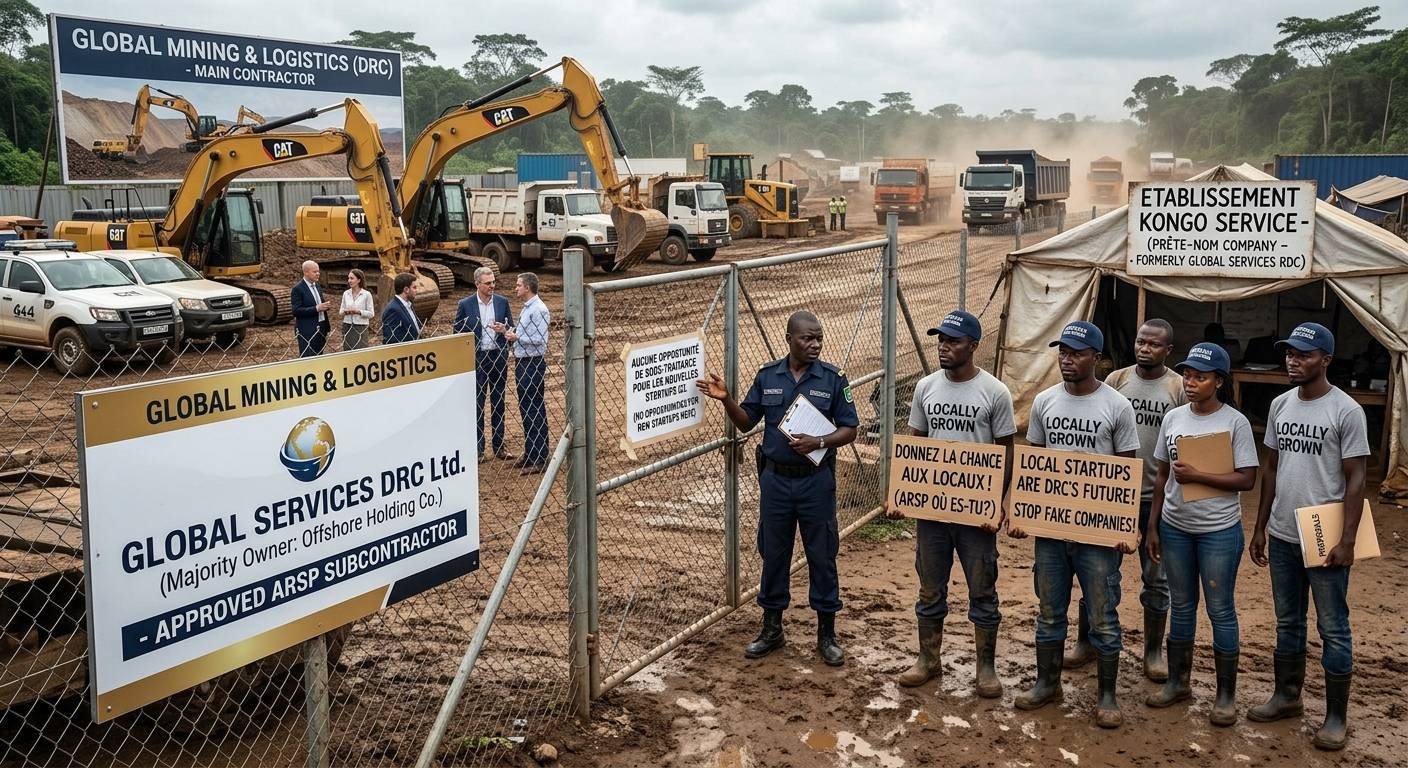
Unfortunately, in the DRC, this chain is broken. Giant corporations protect their projects fiercely. Instead of opening doors to boost local businesses, they set impossible requirements that automatically disqualify young startups. Because of this, the energy and innovation of Congolese startups are crushed before they even get a chance to show what they can do.
Fake Companies: Bypassing the Law
To fix these injustices, the government created the ARSP (the regulatory body for private subcontracting) with a clear rule: subcontracting companies must be majority-owned by Congolese citizens. However, some groups quickly found a dishonest way around it.
To bypass the law and avoid sharing business fairly, many large corporations set up front companies or fake businesses. By using local names on paper as a cover, they pretend to follow the rules. In reality, the money and profits from these big contracts never enter the actual Congolese economy; they are sent abroad or stay in the pockets of the same wealthy actors.
No Support from Public Contracts
What makes local entrepreneurs even more frustrated is that the government and public services do not lead by example. When it comes to state-funded projects?like building roads, setting up solar energy, or upgrading digital systems?public institutions rarely give opportunities to local startups. Instead, they choose the easy route by hiring foreign companies or well-established giants. When the state does not trust its own young, technical minds, it sends a terrible message to the country.
Simple Solutions to Support Local Talent
If we want our national wealth to stay in the Congo instead of being exported through "imported" subcontractors, we need simple, transparent changes right now:
1. A Public "Window of Opportunities"
The government should create a central, transparent online platform where every big project (public or private) must list its subcontracting needs. This would give every local startup an equal chance to see openings and apply fairly, without needing special connections.
2. A "Small Business Act" for the DRC
We need a law that forces big projects (in mining, telecoms, or infrastructure) to give a specific percentage of their budget (for example, 20% to 30%) directly to real, Congolese-owned startups and small businesses.
3. Strict Checks on Fake Companies
The ARSP and tax authorities need to step out of their offices and audit companies on the ground. They must check if a company is truly local, who is actually doing the hard work on-site, and exactly where the money is going.
4. Prioritizing Local Technicians
To stop foreign workers from taking all the jobs, the state should support local certification programs. If a Congolese engineer or technician has the right skills and certifications, the law should give them priority over a foreign worker for any job on Congolese soil.
Conclusion
The true wealth of the DRC is not just what lies underground in our mines; it is the talent of our people. By shutting out local startups, the country is missing its chance to become economically independent. Supporting local skills is not a favor?it is a patriotic and economic necessity for the future of the Congo.